REACTION TIMETEST
Click the moment the screen changes and this reaction time test records your response to the nearest millisecond. Run several rounds with randomized delays to see your true average and where you sit against common benchmarks.
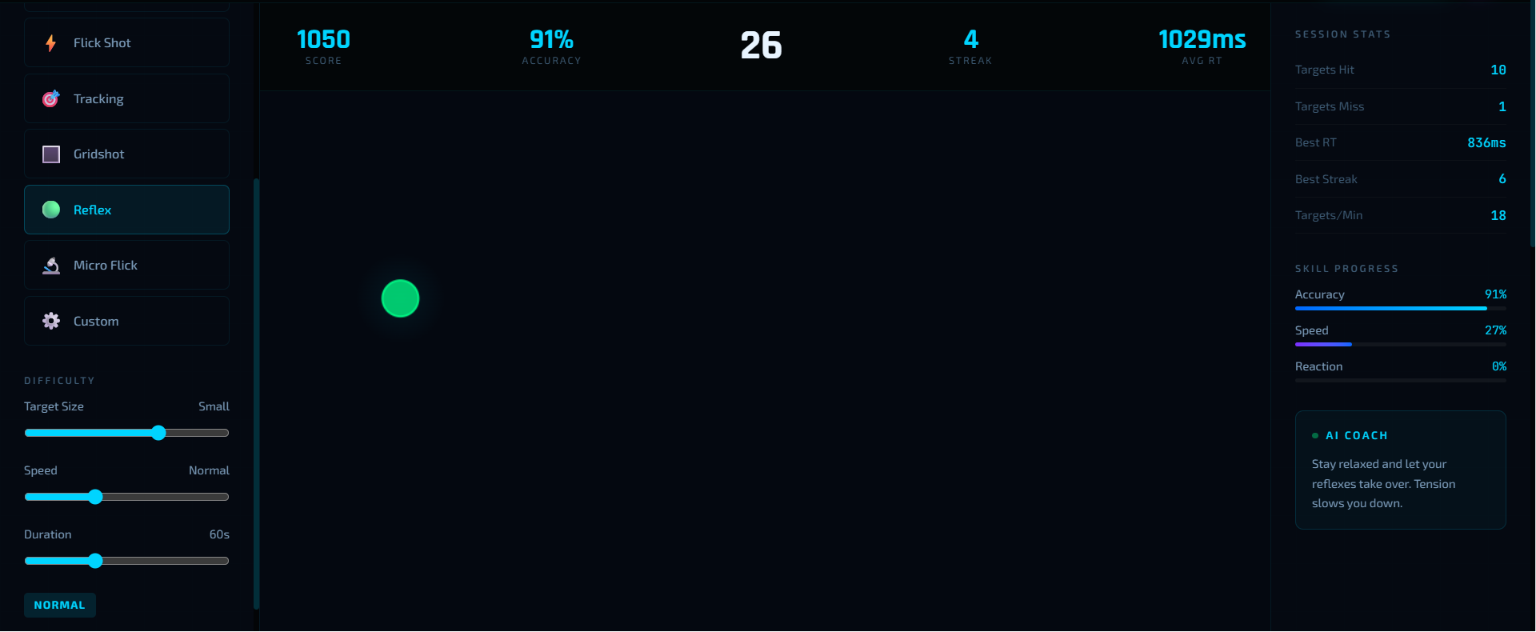
How Fast Do You React? Measure It in Milliseconds
Your reaction time is the gap between a cue appearing and your hand responding to it. This reaction time test puts a number on that gap: the screen waits, then changes, and the clock measures how quickly you click in milliseconds. Because the wait before each cue is randomized, you cannot time your click in advance — you have to genuinely react.
A single round is noisy, so the test runs several in a row and lets you read your average rather than one lucky tap. That average is the figure worth tracking. For context, a visual reaction of around 250ms is typical for most people, while players who train regularly often sit faster — but the most useful comparison is always against your own past results.
How the reaction time test works
Each round starts with a short, randomized delay. The delay changes every time on purpose, so you cannot anticipate the cue or pre-fire your click — if you click before the screen changes, that attempt does not count as a real reaction.
When the cue appears, click as fast as you can. The test records the time between the cue and your click in milliseconds, then moves on to the next round. Run several rounds and read your average, not your single best attempt — one quick tap can be luck, but a steady average across rounds is a reliable picture of your reaction speed.
Reaction time benchmarks
These ranges are general references for visual reaction, not guarantees or targets you must hit — bodies and setups differ, and a single test on a tired day will not represent you.
- Around 250ms — a common average for adults reacting to a visual cue.
- Under 200ms — a solid result, in the range many FPS players reach with practice.
- Under 150ms — elite territory, rare and usually seen in highly trained competitors.
What affects your reaction time
Your score on any given attempt depends on more than raw reflexes. Several everyday factors push it up or down:
- Sleep and alertness — being well-rested and focused tends to give your fastest, most consistent times.
- Caffeine in moderation — a normal amount can help alertness for some people; overdoing it can leave you jittery instead.
- Age — reaction speed shifts naturally over a lifetime, so compare yourself mainly to your own history.
- Screen and input latency — a high-refresh display and a responsive mouse measure your true reaction more closely than a laggy setup.
- Being warmed up — your first cold attempts are usually slower than ones taken after a few practice rounds.
How to improve your reaction time
- Practice in short, regular sessions rather than one long grind — frequency matters more than marathon attempts.
- Warm up first. Run a few throwaway rounds so the score you keep reflects a ready hand, not a cold start.
- Support it with good habits: enough sleep, sensible caffeine, and a comfortable, low-latency setup.
- Track your average across several attempts over time, and judge progress by that trend rather than by one standout score.